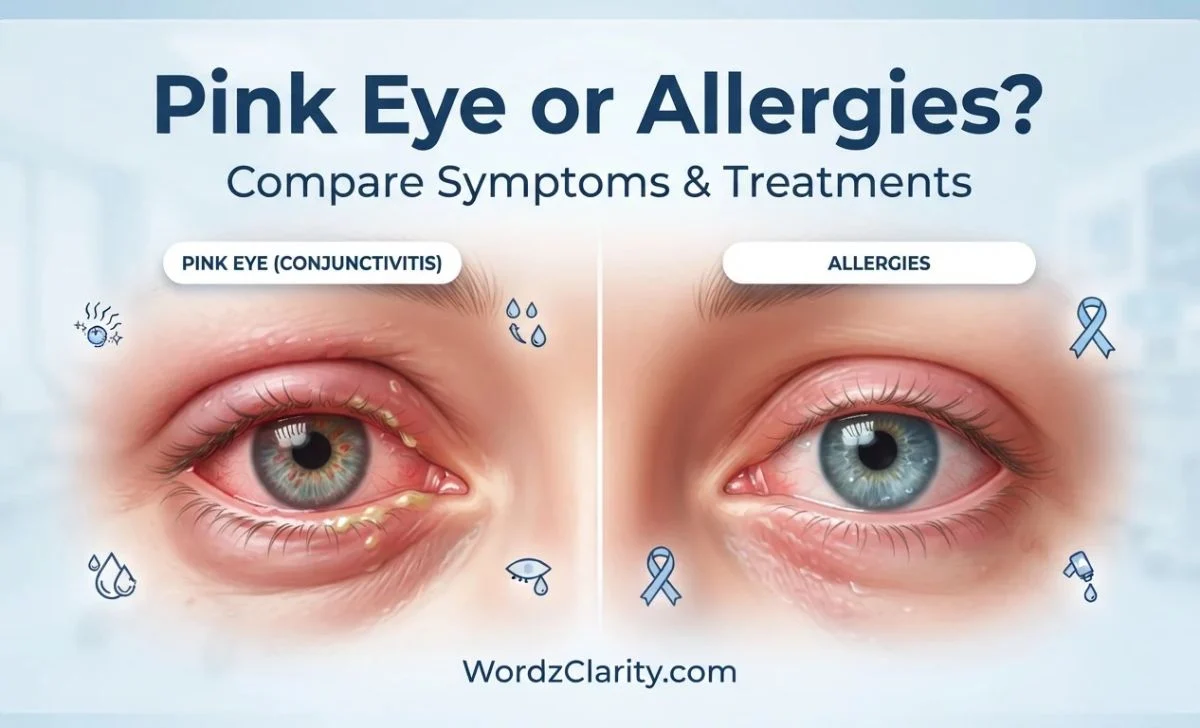
Red, itchy, watery eyes can make you wonder whether you have pink eye or allergies. The two conditions can look alike, especially in the early stages. Yet, they have different causes, and knowing the difference can help you choose the right next step.
The biggest clue is often the type of discomfort you feel. Eye allergies commonly cause strong itching in both eyes. Infectious pink eye may begin in one eye and spread to the other.
It can also cause watery discharge, sticky eyelids, or thicker mucus. However, these signs can overlap, so symptoms alone cannot always tell you what is wrong.
In this guide, you will learn how to compare pink eye vs. allergies, recognize early symptoms, understand what one red eye may mean, and explore common treatment options. You will also find a simple symptom quiz, answers to common questions, and warning signs that need medical attention.
This information can help you understand your symptoms, but it cannot replace an eye examination or a diagnosis from a healthcare professional.
Quick Answer: Pink Eye or Allergies?
Eye allergies are more likely when intense itching affects both eyes, especially with sneezing, a runny nose, or a history of seasonal allergies. Infectious pink eye is more likely when redness occurs with discharge, sticky eyelids, or a recent exposure to someone with an eye infection.
Neither pattern proves the cause. Pink eye is a general term for conjunctivitis, which can result from an infection, an allergy, or irritation.
| Sign | Pink eye caused by infection | Eye allergies |
|---|---|---|
| Itching | Possible, but often less prominent | Often intense |
| Redness | Common | Common |
| Discharge | Watery or thick, depending on the cause | Usually watery |
| Both eyes affected | May start in one eye | Often affects both |
| Sneezing or runny nose | May occur with a viral illness | Common with allergies |
| Contagious | Viral and bacterial types can spread | Not contagious |
| Common triggers | Viruses or bacteria | Pollen, dust, pet dander, and mold |
Example: If both eyes itch after you spend time outdoors and you also sneeze, allergies may be responsible. If one eye becomes red and develops discharge after contact with someone who has pink eye, an infection is another possibility.
These are clues, not a diagnosis. Severe pain, light sensitivity, or changes in vision need prompt medical assessment.
What Is Pink Eye?
Pink eye, also called conjunctivitis, is inflammation of the conjunctiva. This is the thin, clear layer that covers the white part of the eye and lines the inside of the eyelids. When it becomes inflamed, the eye may look pink or red.
Pink eye can have several causes:
- Viral conjunctivitis: Often linked to viruses that also cause colds and other respiratory infections.
- Bacterial conjunctivitis: Caused by bacteria and may produce thick discharge.
- Allergic conjunctivitis: Triggered by substances that cause an allergic reaction.
- Irritant conjunctivitis: Can occur after exposure to smoke, dust, chemicals, or other irritants.
This distinction matters because pink eye does not always mean you have an infection. Allergies can also cause conjunctivitis, and the right treatment depends on the cause.
Viral Pink Eye
Viral pink eye often causes redness, watery discharge, and irritation. It may start in one eye and spread to the other within a few days. Some people also have a sore throat, a runny nose, or other cold symptoms.
Viral conjunctivitis is contagious. It can spread through contaminated hands, towels, or other objects that come into contact with the eyes.
Antibiotics do not treat viral infections. Many mild cases improve on their own, although recovery can take time.
Bacterial Pink Eye
Bacterial pink eye can cause a red eye with thicker discharge. The discharge may be yellow, white, or green, and the eyelids may stick together after sleep.
However, discharge alone cannot confirm a bacterial infection. Other types of conjunctivitis can cause similar symptoms.
A healthcare professional can help determine whether antibiotic eye drops are needed. Do not use leftover prescription drops or someone else’s medication.
What Are Eye Allergies?
Eye allergies occur when the immune system reacts to a substance that is usually harmless. This reaction can cause itching, redness, tearing, and swelling.
The medical term is allergic conjunctivitis, which is one type of conjunctivitis.
Common triggers include:
- Pollen from trees, grasses, and weeds
- Dust mites
- Pet dander
- Mold spores
- Certain cosmetics
- Some contact lens solutions
Eye allergies may appear during certain seasons or continue throughout the year. For example, pollen may trigger symptoms outdoors in spring, while dust mites may cause problems indoors.
People with hay fever, asthma, or eczema may also experience eye allergy symptoms. Sneezing, an itchy nose, and a runny nose can provide additional clues.
Why Allergies Often Affect Both Eyes
Allergens usually reach both eyes through the surrounding air or by contact with the hands. As a result, allergic conjunctivitis often affects both eyes.
The eyes may feel very itchy, watery, and puffy. Rubbing them can make the irritation worse.
Still, symptoms in both eyes do not automatically mean allergies. Infections and other eye conditions can also affect both sides.
Pink Eye or Allergies in One Eye
Having symptoms in only one eye can make the difference harder to judge.
Viral pink eye often starts in one eye before spreading to the other. An infection can also remain more noticeable on one side. By contrast, allergies often affect both eyes, but one eye may feel worse than the other.
| What you notice | What it may suggest |
|---|---|
| One red eye with watery discharge | Viral pink eye or irritation |
| One eye with thick discharge and sticky lashes | Possible bacterial pink eye |
| One itchy eye after touching a plant or cosmetic | Local irritation or an allergic reaction |
| One eye with severe pain or blurred vision | A potentially serious eye problem that needs prompt assessment |
These patterns are not enough to make a diagnosis.
If only one eye is red, consider whether you touched it after handling an irritant or whether you have been around someone with an eye infection. Avoid rubbing it or sharing towels while the cause is unclear.
Important: A painful red eye, sensitivity to light, or a change in vision should not be treated as a simple allergy without medical assessment. Contact lens wearers with a red or painful eye need prompt eye care because some infections can threaten vision.
Early-Stage Pink Eye vs. Allergies
Early symptoms can be subtle. You may first notice mild redness, watering, itching, or a feeling that something is in your eye.
Here are some clues to watch for.
Early Signs of Pink Eye
- Redness that develops over hours or a day
- Watery discharge or mucus
- Eyelids that feel sticky after sleep
- Irritation that follows contact with someone who has pink eye
- Cold symptoms alongside eye redness
Viral pink eye may become noticeable in one eye first. Bacterial pink eye may produce thicker discharge, although this is not a reliable way to identify the cause on its own.
Early Signs of Eye Allergies
- Strong itching
- Watery eyes
- Swollen or puffy eyelids
- Symptoms in both eyes
- Sneezing or an itchy, runny nose
- Symptoms that appear after contact with pollen, pets, or dust
Allergy symptoms may improve when you move away from the trigger. They may return when you encounter it again.
Can You Tell From the First Day?
Not always. Pink eye and allergies share several symptoms, and early symptoms can look almost identical.
Pay attention to how the symptoms change, whether you have other allergy or infection symptoms, and whether you have been exposed to a possible trigger. If the symptoms are severe, worsen, or fail to improve, seek professional advice rather than relying on a symptom checklist.
Pink Eye vs. Allergies: Pictures and Visual Differences
Pictures can help you understand what redness, swelling, and discharge may look like. However, an image cannot reliably tell you whether an eye condition is caused by an infection or an allergy.

Infectious pink eye
The white of the eye may look pink or red. Watery discharge is common with viral conjunctivitis, while bacterial conjunctivitis may produce thicker discharge and crusting.

Allergic conjunctivitis
The eyes may look red and watery, with puffy eyelids. Intense itching is a particularly useful clue, especially when both eyes are affected.
Both conditions can cause redness and swelling. The appearance alone may not be enough to distinguish them, so a healthcare professional may need to examine your eyes and review your symptoms.
CDC
+1
Pink Eye or Allergies Quiz: What Do Your Symptoms Suggest?
Use this short quiz to organize your symptoms. It is an educational guide, not a medical diagnostic test.
Choose the answer that best describes your symptoms.
1. Which symptom bothers you most?Strong itchingDischarge or sticky eyelidsPain or vision changesMostly watery eyes
2. How many eyes are affected?Both eyesOne eye onlyIt changes or is unclear
3. Do you have sneezing or a runny nose?Yes, especially around allergensNoI have cold symptoms
4. What happened before the symptoms began?Pollen, dust, pets, or another triggerContact with someone with pink eyeNothing obvious
Review my answers
This quiz cannot diagnose an eye condition. If you have eye pain, light sensitivity, blurred vision, or intense redness, seek prompt medical assessment instead of relying on the quiz.
A pattern of strong itching, symptoms in both eyes, and a clear allergy trigger may fit eye allergies. Discharge, sticky eyelids, or exposure to an infected person may raise concern about infectious conjunctivitis. Neither pattern confirms the cause.
Is Pink Eye Contagious but Allergies Are Not?
The answer depends on what causes the conjunctivitis.
Viral and bacterial pink eye can spread from person to person. Allergic conjunctivitis does not spread between people. The symptoms may look similar, but the causes are different.
Infectious pink eye can spread through contaminated hands, towels, pillowcases, or objects that touch the eyes. Touching eye discharge and then touching another person’s belongings may also spread infection.
Allergies happen because your body reacts to an allergen. You cannot catch an allergy from another person.
If you suspect infectious pink eye, take these precautions:
- Wash your hands often with soap and water.
- Avoid rubbing or touching your eyes.
- Do not share towels, washcloths, or pillowcases.
- Avoid sharing eye makeup or eye drops.
- Clean discharge gently with a clean, damp cloth.
- Stop wearing contact lenses until it is safe to resume them.
These steps help reduce the risk of spreading an infection.
Allergic Pink Eye Treatment vs. Infectious Pink Eye Treatment
The best treatment depends on the cause. A remedy that helps one condition may not treat another.
How to Treat Allergic Conjunctivitis
The main goal is to reduce exposure to allergens and relieve itching and swelling.
Common options include:
- Cold compresses: Place a clean, cool cloth over closed eyes to ease itching and swelling.
- Artificial tears: These may help wash away allergens and soothe irritation.
- Allergen avoidance: Reduce contact with pollen, dust, pet dander, or other known triggers.
- Antihistamine eye drops: These may help relieve allergy symptoms. Ask a pharmacist or healthcare professional which product is appropriate.
- Other allergy medicines: Oral or prescription treatments may help in some cases.
Avoid rubbing your eyes, even if they itch intensely. Rubbing can make irritation worse.
How to Treat Viral Pink Eye
Most mild cases of viral pink eye improve without a specific medicine. Cold compresses and artificial tears may provide relief.
Antibiotics do not work against viruses. A healthcare professional may recommend additional treatment if a less common but more serious viral cause is suspected.
How to Treat Bacterial Pink Eye
Some bacterial infections improve without antibiotics, while others may need prescription antibiotic eye drops or ointment.
A clinician can decide whether antibiotics are appropriate based on the symptoms and examination. Do not assume that thick discharge always means you need antibiotics.
The CDC recommends medical assessment for warning signs such as eye pain, light sensitivity, intense redness, or blurred vision that does not clear after wiping away discharge.
How Long Does Pink Eye or Allergic Conjunctivitis Last?
Recovery time varies with the cause and how long you remain exposed to irritants or allergens.
| Condition | Typical course |
|---|---|
| Viral pink eye | Often improves within 7–14 days; some cases take 2–3 weeks or longer |
| Bacterial pink eye | Mild cases may improve in 2–5 days, but complete recovery can take up to 2 weeks |
| Allergic conjunctivitis | May improve after allergen exposure stops; symptoms can persist or return while exposure continues |
| Irritant-related redness | Depends on the substance and severity; ongoing or severe symptoms need medical advice |
These are general time frames, not guarantees. Bacterial pink eye may need treatment, and allergies may continue as long as the trigger remains present.
How Long Does Allergic Conjunctivitis Last?
Allergic conjunctivitis may last a few hours, several days, or longer. The duration depends on the trigger, the level of exposure, and whether treatment helps.
For example, irritation after brief exposure to pollen may settle once you leave the area and rinse away the allergen with suitable eye care. Symptoms caused by ongoing exposure to dust mites or pets may continue for longer.
If your symptoms persist despite avoiding triggers, or you are unsure whether allergies are responsible, arrange an eye examination.
When Should You See an Eye Doctor?
Red, itchy eyes are often caused by mild conditions, but some eye problems need urgent care. Do not rely on the pink eye or allergies comparison alone if you have warning signs.
Seek prompt medical assessment if you experience:
- Severe eye pain
- Sensitivity to light
- Blurred or reduced vision
- Intense redness
- Symptoms that worsen or fail to improve
- Redness or pain while wearing contact lenses
Contact lens wearers should remove their lenses and seek prompt eye care if they develop redness or pain. A corneal infection can resemble conjunctivitis and may threaten vision if not treated.
Newborns with symptoms of pink eye need immediate medical attention.
FAQs
1. Can allergies turn into infectious pink eye?
No. Allergies do not turn into a viral or bacterial infection. However, allergic conjunctivitis can cause redness that looks like infectious pink eye. A person can also develop an infection while experiencing allergies.
2. Can you have pink eye and allergies at the same time?
Yes. Someone with seasonal allergies can also develop viral or bacterial conjunctivitis. If symptoms are unusual, severe, or different from your usual allergy symptoms, seek medical advice.
3. Does pink eye always produce discharge?
No. Pink eye can cause redness, swelling, irritation, or watering without noticeable discharge. The type and amount of discharge vary with the cause.
4. Can eye allergies cause crusty eyes in the morning?
Allergies can cause watery eyes and mucus, which may leave some residue around the eyelids. However, thick discharge and eyelids stuck together can also occur with bacterial conjunctivitis. Crusting alone cannot identify the cause.
5. Can you go to work or school with pink eye?
It depends on the cause, your symptoms, and the risk of spreading an infection. Allergies are not contagious, but viral and bacterial conjunctivitis can spread. Follow your healthcare professional’s advice and any applicable school or workplace rules.
6. Are over-the-counter eye drops enough to treat pink eye?
Some products, such as artificial tears, may ease discomfort. Antihistamine eye drops may help allergic conjunctivitis. However, over-the-counter products do not treat every cause of pink eye. Ask a healthcare professional if you are unsure which drops are suitable.
7. Can you use leftover antibiotic eye drops for red eyes?
No. Leftover antibiotic drops may be unsuitable for the current condition, and antibiotics do not treat viral pink eye or allergies. Get medical advice before using prescription eye medication.
Conclusion
Knowing whether you have pink eye or allergies starts with looking at your symptoms, possible triggers, and how the condition develops.
Intense itching in both eyes, watery tears, sneezing, and exposure to pollen or dust often point toward eye allergies. Redness with discharge, sticky eyelids, or contact with someone who has an eye infection may suggest infectious conjunctivitis.
However, these patterns overlap. Pink eye can be caused by viruses, bacteria, allergens, or irritants, so redness alone does not tell you which condition you have. Allergic conjunctivitis is not contagious, while viral and bacterial pink eye can spread through contaminated hands and objects.
For mild irritation, a clean cold compress and suitable artificial tears may provide relief. Avoid rubbing your eyes, sharing towels, or using prescription drops without medical advice. If symptoms persist or worsen, arrange an eye examination.
Most importantly, do not ignore severe pain, light sensitivity, intense redness, or vision changes. These symptoms need prompt medical assessment.
A symptom quiz or comparison chart can help you understand what you are experiencing, but a healthcare professional is the right person to determine the cause and recommend treatment.
Read More Blogs
- Olipop or Poppi: Which Prebiotic Soda Is Right for You?
- Hulu or Netflix: Which Is Better in 2026?
- Zelle or Venmo: Which Is Better for Sending Money?
- Madame or Madam: Meaning, Spelling, and Usage Explained