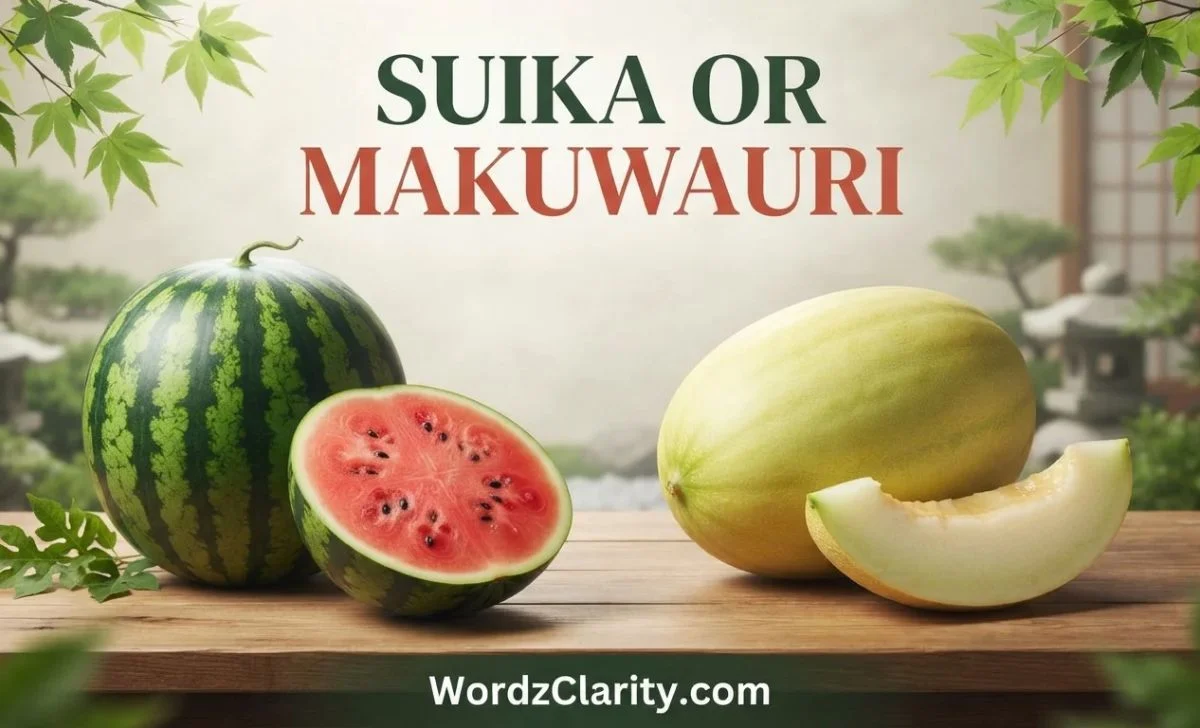
Have you ever wondered whether suika and makuwauri are two names for the same fruit? Both are popular terms in Japanese fruit culture, and both refer to refreshing fruits enjoyed during warm weather. However, they are not the same.
Understanding the difference helps you identify each fruit, learn more about Japanese food traditions, and choose the one that best suits your taste.
Suika is the Japanese word for watermelon. It is known for its juicy flesh, crisp texture, and refreshing flavor. Makuwauri, also written as makuwa uri, is a traditional Japanese oriental melon. It usually has a firmer texture, a mild sweetness, and a shape that can be oval or elongated.
Although both fruits belong to the gourd family, they have different botanical classifications and characteristics. Their flavors, textures, appearances, and cultural roles also differ.
In this guide, you will learn what suika and makuwauri mean, how to tell them apart, which fruit may taste sweeter, how people enjoy them in Japan, and what to know before buying or serving either one.
Quick Answer: Suika or Makuwauri?
Suika means watermelon in Japanese, while makuwauri is a traditional type of oriental melon. They are different fruits, not alternative spellings of the same word.
- Suika: A large or small watermelon with a green rind and usually red or pink, juicy flesh. Some varieties have yellow flesh.
- Makuwauri: A traditional Japanese melon that often has yellow or pale green skin and white, greenish, or pale-colored flesh.
For example, if someone says, “I prefer suika,” they mean they prefer watermelon. If they say they enjoy makuwauri, they are talking about a different kind of melon.
Choose suika if you want a juicy, crisp fruit with a refreshing bite. Choose makuwauri if you want a traditional oriental melon with a firmer texture and a gentle, often mild sweetness.
What Is Suika?
Suika (スイカ) is the Japanese word for watermelon. The word is also written as 西瓜 in Japanese. Watermelon belongs to the botanical species Citrullus lanatus and is a member of the Cucurbitaceae family, which includes cucumbers, pumpkins, and melons.
Watermelon is widely enjoyed as a summer fruit because its flesh contains a high proportion of water. It can be eaten fresh, served in slices, added to fruit salads, or used in cold drinks.
What Does Suika Look Like?
A typical watermelon has a thick green rind, often with darker stripes. Its flesh is usually red or pink, although yellow-fleshed varieties also exist. The fruit contains black, brown, or white seeds, depending on the variety. Seedless watermelons are also available.
Watermelons vary greatly in size. Some are large enough to share with a group, while smaller varieties are suitable for one or two people.
Common features of suika include:
- A green outer rind
- Juicy, crisp flesh
- A refreshing, sweet flavor when ripe
- Red, pink, or sometimes yellow flesh
- Seeds or a seedless interior, depending on the variety
What Does Suika Taste Like?
Ripe watermelon is usually sweet, mild, and very juicy. Its crisp flesh breaks easily when bitten, releasing plenty of moisture. The flavor can range from lightly sweet to rich and sugary, depending on the variety and growing conditions.
For example:
- Everyday conversation: “I bought a suika for our picnic.”
- Food writing: “The chilled watermelon offered a sweet and refreshing finish.”
- Social media: “Nothing beats a cold slice of suika on a hot day.”
These examples show how the Japanese word can appear in English-language conversations about Japanese food.
What Is Makuwauri?
Makuwauri (まくわうり), also written as makuwa uri, is a traditional Japanese name for an oriental melon. Its Japanese characters are 真桑瓜. Botanically, it belongs to Cucumis melo, the species that also includes many other melons.
The scientific name Cucumis melo var. makuwa has been used for this melon. Modern taxonomic databases may treat that botanical name as a synonym of Cucumis melo.
Makuwauri has a long history in Japan. It was an important traditional melon before modern Western-style melon varieties became popular. Today, it is associated with heritage food traditions and can be harder to find than common supermarket melons in some areas.
What Does Makuwauri Look Like?
Makuwauri comes in different varieties, so its appearance is not always the same. Some types have yellow skin, while others have pale green or whitish skin. The flesh may be white, green, or another pale shade.
The fruit is often oval or elongated. Some varieties have a firmer flesh than the soft, melting texture found in certain modern melons.
Typical features include:
- Yellow, pale green, or whitish skin
- White or pale-colored flesh in many varieties
- An oval or elongated shape
- A firm or crisp texture
- A mild, sweet, sometimes fragrant flavor
Makuwauri is a traditional melon rather than a type of watermelon. Its classification within Cucumis melo distinguishes it from watermelon, which belongs to Citrullus.
What Does Makuwauri Taste Like?
Makuwauri often has a gentle sweetness and a fresh, mild flavor. Depending on the variety and ripeness, its taste may remind you of a mild melon with hints of cucumber. Its flesh can be firmer than that of many modern dessert melons.
Not every makuwauri tastes exactly alike. Growing conditions, maturity, and the specific variety affect sweetness and texture.
For example:
- At home: “This makuwauri is mild and crisp.”
- In a food review: “The traditional melon had a delicate sweetness rather than an intense sugary flavor.”
- In a conversation about Japanese food: “I would like to try makuwauri because it is a traditional Japanese melon.”
These examples use the word naturally without suggesting that it means watermelon.
Suika vs. Makuwauri: Key Differences
The easiest way to understand suika or makuwauri is to compare their appearance, botanical classification, taste, texture, and common uses.
| Feature | Suika | Makuwauri |
|---|---|---|
| English name | Watermelon | Oriental melon; traditional Japanese melon |
| Japanese writing | スイカ or 西瓜 | まくわうり or 真桑瓜 |
| Botanical species | Citrullus lanatus | Cucumis melo |
| Plant family | Cucurbitaceae | Cucurbitaceae |
| Typical outer color | Green, often striped | Yellow, pale green, or whitish |
| Flesh color | Usually red or pink; sometimes yellow | Often white, greenish, or pale |
| Texture | Juicy and crisp | Often firmer and crisp |
| Flavor | Refreshing and sweet | Mildly sweet and sometimes fragrant |
| Typical shape | Round, oval, or elongated | Often oval or elongated |
| Water content | High | High, though it varies by variety |
| Cultural role in Japan | Popular summer fruit | Traditional melon with historical and seasonal significance |
The table describes common characteristics, not fixed rules for every cultivar. Both fruits have varieties with different shapes, colors, and flavor profiles.
Are Suika and Makuwauri in the Same Plant Family?
Yes. Both belong to the Cucurbitaceae family, often called the gourd family. This family also includes cucumbers, pumpkins, squash, and several other melons.
However, sharing a plant family does not make two fruits the same. Suika belongs to Citrullus lanatus, while makuwauri belongs to Cucumis melo. These are different botanical species.
Think of it this way: two fruits can be related without being interchangeable. Their family connection explains some broad similarities, but their species and varieties help explain their differences.
Which Is Sweeter: Suika or Makuwauri?
There is no single answer for every fruit. Both suika and makuwauri can taste sweet, but their sweetness depends on the variety, growing conditions, ripeness, and storage.
Watermelon often has a clear, juicy sweetness. Because the flesh is full of moisture, its flavor can feel light and refreshing. Some ripe varieties are very sweet, while others have a milder taste.
Makuwauri usually has a more delicate sweetness. Traditional oriental melon varieties may taste less sugary than some modern dessert melons. Their flavor can be mild and fresh, and their texture may be firmer.
Use these general guidelines when choosing:
- For juicy sweetness: Try a ripe suika.
- For mild melon flavor: Try a ripe makuwauri.
- For a firm bite: Look for a makuwauri variety known for crisp flesh.
- For a refreshing summer snack: Either fruit can work well when served fresh and chilled.
Do not assume that every watermelon is sweeter than every makuwauri. A ripe, sweet makuwauri may taste sweeter than a less-ripe watermelon.
Why Do Some People Prefer Suika?
People who prefer suika often enjoy its juicy texture, familiar flavor, and refreshing quality. Watermelon is easy to slice and share, which makes it a popular choice for picnics, family meals, and summer gatherings.
Its flavor also works well with other foods. You can serve it on its own, combine it with berries, or add small pieces to a fruit salad.
Consider these everyday examples:
At a picnic: “I prefer suika because everyone can share a few slices.”
After exercise: “A chilled piece of watermelon sounds refreshing.”
In a restaurant review: “The watermelon was crisp, sweet, and served at the perfect temperature.”
These statements express a personal preference. They do not mean suika is universally better than makuwauri.
Someone may prefer makuwauri because it has a different texture, a more subtle flavor, or a connection to traditional Japanese cuisine. Taste is personal, so the better choice depends on what you enjoy.
Suika and Makuwauri in Japanese Food Culture
Both fruits fit into Japan’s wider food culture, but they have different histories and roles.
Suika as a Summer Fruit
Watermelon is commonly associated with summer in Japan. It is served in slices, chilled before eating, and enjoyed during hot weather. The fruit is also connected with summer activities and seasonal food traditions.
Japanese speakers use suika when talking about watermelon at a market, at home, or in a restaurant. If you are learning Japanese, this is the word to remember when you want to buy watermelon.
For example:
- “Suika o kudasai” is a simple way to ask for watermelon, though the exact phrasing may vary with context.
- “Suika ga suki desu” means “I like watermelon.”
These phrases illustrate the word’s everyday use. The word itself refers to watermelon, not to every type of melon.
Makuwauri as a Traditional Japanese Melon
Makuwauri has a long history in Japan. Historical and botanical references connect its name with Makuwa, an area in present-day Gifu Prefecture known for producing melons. It was once a more familiar traditional melon before modern Western-style melons gained popularity.
The fruit is also associated with seasonal customs, including offerings during the Bon period. Its place in Japanese food history makes it interesting to people exploring traditional crops and regional foods.
This history does not mean makuwauri is no longer eaten. Rather, it is a traditional fruit that may be less common than some modern melon varieties in everyday shops.
Is Makuwauri the Same as Korean Melon?
Not exactly. Makuwauri and Korean melon are related oriental melon types, but the names should not automatically be treated as interchangeable.
Korean melon is commonly known in Korean as chamoe. It belongs to the species Cucumis melo, as does makuwauri. However, varieties can differ in appearance, texture, sweetness, and how they are cultivated.
Both are related to the wider group of oriental melons, which are grown in East Asia. The exact relationship depends on the variety and the way the terms are being used.
If you are shopping for one, check the fruit’s label or ask the seller. The phrase “oriental melon” can refer to a broader group, while “makuwauri” points more specifically to the traditional Japanese melon.
How to Choose, Store, and Serve Suika or Makuwauri
Knowing the difference is useful, but knowing how to handle each fruit helps you enjoy it.
Choosing a Good Suika
When buying a whole watermelon, look for a fruit that feels heavy for its size and has a firm, undamaged rind. A creamy field spot may indicate that the fruit rested on the ground as it grew, although no single sign guarantees ripeness.
If possible, buy from a seller who can advise you about the variety and its maturity.
Choosing a Good Makuwauri
Look for fruit that is firm and free from deep cuts, soft spots, or signs of decay. Color varies by variety, so yellow skin is not the only sign of a good makuwauri.
A gentle, pleasant fragrance may help you judge a ripe fruit, but aroma varies. Ask the seller about the specific variety if you are unfamiliar with it.
Storing Both Fruits
Keep uncut fruit in a cool, suitable place according to its condition and the advice provided by the seller. Once cut, place the fruit in a clean, covered container in the refrigerator. Refrigerate cut fruit promptly and avoid leaving it at room temperature for long periods.
Wash the outer surface before cutting so that dirt and microbes on the rind are less likely to transfer to the flesh through a knife.
Simple Serving Ideas
You can enjoy both fruits fresh, but their textures make them useful in different ways.
For suika:
- Serve chilled slices at a picnic.
- Add cubes to a fruit salad.
- Blend the flesh into a simple, refreshing drink.
- Pair it with other summer fruits.
For makuwauri:
- Serve thin slices as a fresh snack.
- Add cubes to a mixed melon plate.
- Try it chilled to appreciate its crisp texture.
- Explore traditional Japanese recipes that use oriental melon.
Start with a small serving if you have never tried makuwauri. Its flavor may be more subtle than the watermelon you already know.
Common Mistakes When Comparing Suika and Makuwauri
The terms are easy to confuse when you are unfamiliar with Japanese fruit names. These common mistakes can lead to inaccurate descriptions.
1. Treating Them as Two Names for Watermelon
Suika means watermelon. Makuwauri refers to a traditional oriental melon. They are different fruits, even though they belong to the same plant family.
Better approach: Use “watermelon” for suika and “oriental melon” or “traditional Japanese melon” for makuwauri.
2. Assuming Every Makuwauri Has Yellow Skin
Makuwauri varieties can have different skin and flesh colors. Yellow is common, but pale green and whitish forms also exist.
Better approach: Describe the particular fruit you have rather than assuming every variety looks identical.
3. Claiming One Fruit Is Always Sweeter
Sweetness varies with ripeness and variety. A general comparison can help readers, but it cannot predict the taste of every individual fruit.
Better approach: Use phrases such as “often,” “usually,” and “depending on the variety” when describing flavor.
4. Confusing Botanical Family With Species
Both fruits belong to Cucurbitaceae, but suika is Citrullus lanatus and makuwauri is part of Cucumis melo.
Better approach: Explain that the fruits are related, not identical.
5. Writing Makuwauri as Though It Were an English Spelling Variant
Makuwauri and makuwa uri are two ways of romanizing or spacing the Japanese name. Neither is an alternative spelling of suika.
Better approach: Use one form consistently in your writing, and explain the other form once if readers may encounter it.
FAQs
1. What does suika mean in English?
Suika is the Japanese word for watermelon. It can be written as スイカ in katakana or 西瓜 in kanji. It does not mean makuwauri or melon in general.
2. Is makuwauri a type of watermelon?
No. Makuwauri is a traditional oriental melon in the Cucumis melo group. Watermelon belongs to a different botanical species, Citrullus lanatus.
3. Is makuwauri the same as cantaloupe?
No, not exactly. Makuwauri is a traditional oriental melon group, while cantaloupe refers to other melon types within Cucumis melo. They share a species-level classification but can differ in texture, appearance, and flavor.
4. Can you eat makuwauri raw?
Yes. Mature makuwauri is commonly eaten fresh. Wash the rind before cutting, then slice the fruit and remove seeds if needed. Some young oriental melon fruits may also be used in cooked dishes, depending on the variety and local practice.
5. Is suika healthier than makuwauri?
Neither fruit is automatically healthier in every situation. Both can be part of a balanced diet. Their nutritional values vary by variety and serving size, so compare reliable nutrition data if you need exact figures.
6. Why is makuwauri considered a traditional Japanese fruit?
Makuwauri has been cultivated in Japan for a long time and was once a familiar melon before modern Western-style varieties became widespread. Historical references also connect it with regional cultivation and seasonal customs.
7. How should I write makuwauri in English?
You may see it written as makuwauri or makuwa uri. Both represent the Japanese name 真桑瓜. For a general audience, introduce it as “makuwauri, a traditional Japanese oriental melon” so readers understand what it is.
Conclusion
The choice between suika and makuwauri depends on the flavor and texture you prefer. Suika is watermelon: juicy, crisp, and often sweet. Makuwauri is a traditional Japanese oriental melon with a firmer texture and a more delicate flavor in many varieties. They belong to the same plant family, but they are different fruits.
If you want a familiar, refreshing fruit for a picnic or a hot day, suika is an easy choice. If you are curious about traditional Japanese foods or want to try a melon with a different texture, makuwauri is worth exploring.
Remember the key distinction: suika means watermelon, while makuwauri means a traditional oriental melon. The names are not interchangeable, and neither fruit is always sweeter or better than the other. Variety and ripeness make a difference.
When writing about these fruits, use their names carefully, describe their characteristics without making absolute claims, and explain the difference for readers who may be new to Japanese food terms. That simple approach will help you choose, describe, and enjoy both fruits with confidence.
Read More Blogs
- Life or Lives: Meaning, Examples, and Proper Usage
- Shined or Shone: Which is correct and use for which porpuse?
- Fourth or Forth: A Simple Guide to the Difference
- Cure or Queue: Meaning, Difference, and Correct Usage