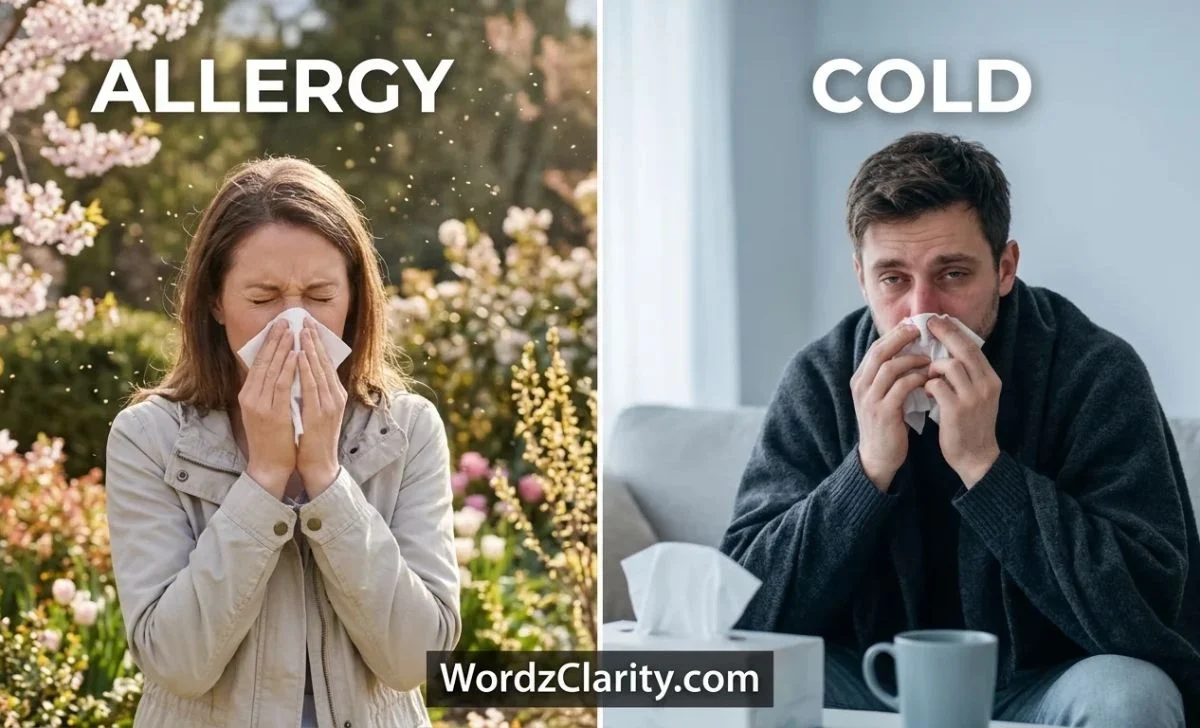
Allergy or cold? Ask three questions. How fast did it start? How long has it lasted? Are your eyes itchy?
A cold builds slowly, often brings a sore throat, and clears in about a week or two. Allergies hit fast, make your eyes itch, and last as long as the trigger is around.
Below, you will find seven clear signs, a quick self-check, and what to do next.
Quick Comparison
| Clue | Cold | Allergy |
|---|---|---|
| Cause | A virus | Your immune system reacting to a trigger |
| Start | Slowly, over a day or two | Suddenly, after exposure |
| Duration | About 7 to 10 days | Days to months |
| Itchy eyes | Rarely | Usually |
| Fever | Sometimes | Never |
| Sore throat | Usually | Rarely |
| Body aches | Common | Not typical |
| Mucus | Often thick, yellow or green | Typically clear and thin |
| Contagious? | Yes | No |
Mayo Clinic’s comparison backs up the big three. Fever is sometimes present with a cold and never with an allergy. Itchy eyes are usual with allergies and rare with colds.
Sign 1: How Fast Did It Start?
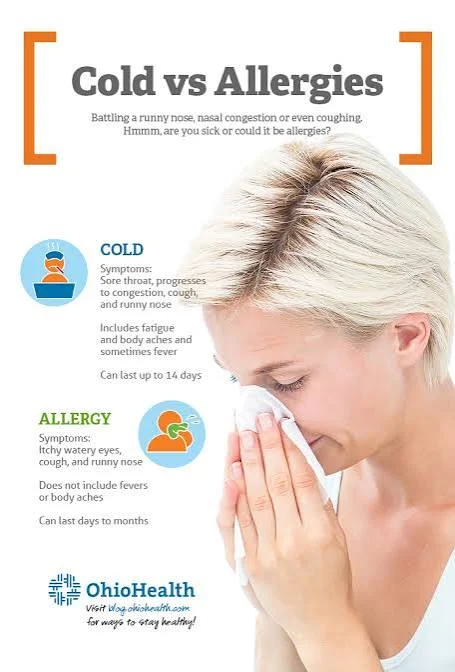
Speed is a strong clue.
A cold creeps in. You feel a scratchy throat on Monday, a stuffy nose on Tuesday, and a cough by Wednesday. Cold symptoms keep changing from day to day. Allergy symptoms usually stay the same after the first day or two.
Allergies hit like a switch. You walk past a pile of damp leaves and start sneezing at once.
Sign 2: How Long Has It Lasted?
Count the days.
A cold usually lasts 7 to 10 days. Allergy symptoms can continue for as long as you stay exposed to the trigger. That can mean weeks, or even months.
So if you have been sniffling for three weeks, a cold is unlikely. Think allergy.
Sign 3: Are Your Eyes Itchy?
This is the fastest test.
Red, watery, itchy eyes together with repeated sneezing point toward allergies. Itchy ears and an itchy throat lean the same way.
Colds can water your eyes. But they rarely make you want to rub them.
Sign 4: Do You Have a Fever or Body Aches?
This one is simple.
A cold tends to make you feel generally unwell. You may have a sore throat, tiredness, body aches, or a fever. Allergies do not cause fever. Even the old name “hay fever” misleads people. It rarely involves hay, and it does not cause a fever.
If you feel hot, achy, and wiped out, think virus.
Sign 5: What Does Your Mucus Look Like?
Check your tissue.
Allergy mucus is typically clear. Cold mucus may look thick and yellow or green.
Treat this as a clue, not proof. Mucus color changes as a cold runs its course. Color alone does not tell you that you need antibiotics.
Sign 6: Does Your Environment Change Things?
Notice where you feel worse.
If you only get stuffy outside, a pollen allergy is likely. If you feel run down indoors, dust mites or pets could be the cause. Cold symptoms do not change with your surroundings.
Here are two real-life examples.
- Sara sneezes every morning on her walk to the bus stop. She feels fine at her desk. Her symptoms follow the place, not the calendar. That points to allergy.
- Mike feels achy and warm on Tuesday. His coworker had the same symptoms last week. That points to a cold.
Sign 7: Can Anyone Else Catch It?
Look around you.
If your roommate and two coworkers are sniffling too, a cold is likely. Other people cannot catch your allergies.
What About a Cough?
Both are the bad.
A cough can fit either one, but the type helps.
Dry coughs and wheezing are more likely with allergies. Colds usually bring a wet, mucus-filled cough.
Wheezing or trouble breathing needs medical attention, whatever the cause.
Quick Self-Check
Answer yes or no.
- Did your symptoms start suddenly?
- Are your eyes, nose, or throat itchy?
- Is your mucus clear?
- Are you free of fever and body aches?
- Do symptoms change with the place you are in?
- Have you had them longer than two weeks?
Four or more yeses point to allergies. Four or more noes point to a cold. A mix may mean you have both, or something else.
Why Fall Makes It Harder to Tell

In the US, fall is the toughest time to sort this out. Two seasons overlap.
Ragweed is the main driver of fall allergies. Its season starts in mid-August in much of the country and lasts until the first hard freeze. Mold then takes over. Frost usually ends the ragweed spread, but mold can linger through November as wet leaves rot.
Meanwhile, cold and flu season is also starting. So the same sniffle could have either cause.
Warmer autumns add to the problem. They can stretch the allergy season by several weeks in some areas.
To see what is in the air near you, check a local pollen forecast by ZIP code, such as the one on Pollen.com.
Could It Be the Flu or COVID?
Yes. Many articles skip this part, so read it closely.
Allergies and colds are mild by comparison. Flu and COVID can be more serious.
- Flu: It hits suddenly, with a higher fever, chills, and heavy fatigue.
- COVID: It can cause fever, a dry cough, and body aches. A change in or loss of taste and smell is its most distinctive symptom, though it does not happen to everyone.
When you are unsure, test. Symptoms overlap so much that testing is the only sure way to tell flu from COVID-19. You can use an at-home test or ask your healthcare provider.
Can You Have an Allergy and a Cold at the Same Time?
Yes. They are separate problems, so one does not rule out the other.
Say you have a ragweed allergy and catch a cold in October. Your sneezing and itchy eyes may continue while a sore throat and fatigue show up. That mix is common in autumn.
How to Treat Each One
The right fix depends on the cause.
For a Cold
- Rest and drink plenty of fluids.
- Use over-the-counter medicine for aches and congestion, following the label.
- Skip antibiotics. There is no cure for the common cold, and antibiotics will not help.
For Allergies
- Avoid your trigger when you can. Keep windows closed on windy, high-pollen days.
- Shower after being outdoors. Pollen sticks to hair and clothes.
- Wash bedding often, especially if pets sleep on it.
- Ask a pharmacist about antihistamines or nasal sprays that suit you.
Treating a cold with allergy medicine, or the reverse, wastes time and money.
When to See a Doctor
Most colds and mild allergies are manageable at home. Get help in these cases.
- Symptoms last more than two weeks. Persistent or severe symptoms are worth a doctor’s visit.
- Allergy medicine is not working. See an allergist if antihistamines do not control your symptoms or breathing becomes difficult.
- You have red-flag symptoms. Seek care right away for difficulty breathing, chest pain, confusion, a persistent high fever, or symptoms that worsen after an initial improvement. In an emergency, call 911.
Children, older adults, pregnant women, and people with weak immune systems should be more careful. Call your primary care provider early.
This article is general information, not medical advice. It does not replace a visit with a healthcare professional.
Sources and Further Reading
Pollen.com, local pollen forecasts
Mayo Clinic, “Cold or allergy: Which is it?”
Mayo Clinic Health System, “Is it an allergy or the common cold?”
National Jewish Health, “Allergies, Cold, Flu or COVID-19 Virus?”
Medical News Today, “What is the difference between an allergy and a cold?”
FAQs
Is a runny nose a sign of allergy or cold?
Either. Look at the other clues. Itchy eyes and clear mucus point to allergy. A sore throat and body aches point to a cold.
How long do allergy symptoms last compared with a cold?
A cold lasts about 7 to 10 days. Allergies can last weeks or longer if the trigger stays around.
Can allergies cause a sore throat?
Sometimes, but it is less common. A scratchy throat from postnasal drip can happen. A severe sore throat points more toward a cold or another infection.
Can allergies cause a fever?
No. If you have a fever, look for an infection.
Are allergies contagious?
No. You cannot catch allergies from someone else.
Why do my allergies feel worse in the morning?
Pollen can settle on your bedding, hair, and pets, so you breathe it in overnight. Washing your bedding often helps.
Can a cold turn into an allergy?
No. A cold is an infection, and an allergy is an immune reaction. But a cold can make you feel worse if you already have allergies.
Conclusion
Colds and allergies feel alike, but they act differently.
A cold sneaks in, brings a sore throat or body aches, and fades within a week or two. Allergies strike fast, make your eyes itch, and stick around as long as the trigger does.
Your best clues are timing, itch, and fever. If your symptoms started suddenly, your eyes itch, and you have no fever, allergies are the likely cause. If they built up slowly and you feel achy, think cold.
Your next step is simple. Avoid your trigger if it is an allergy. Rest and drink fluids if it is a cold. And if you are not sure, or if symptoms last more than two weeks, check in with your doctor or pharmacist.
You do not need a perfect diagnosis on day one. Watch your symptoms for a few days, and you will usually get your answer.
Read More Blogs
- Sinus Infection or COVID: How to Tell the Difference (and When to Test)
- Yea or Yeah: The Quick Guide to Using Each One Right (Plus Yay)
- Curtains or Blinds: Differences, Benefits, and How to Choose
- Eggs Good or Bad: The Truth About Cholesterol and Health
- Trunk or Treat 2025 California: Events, Dates, and Locations
- Trys or Tries: Correct Spelling, Meaning, Grammar, and Examples