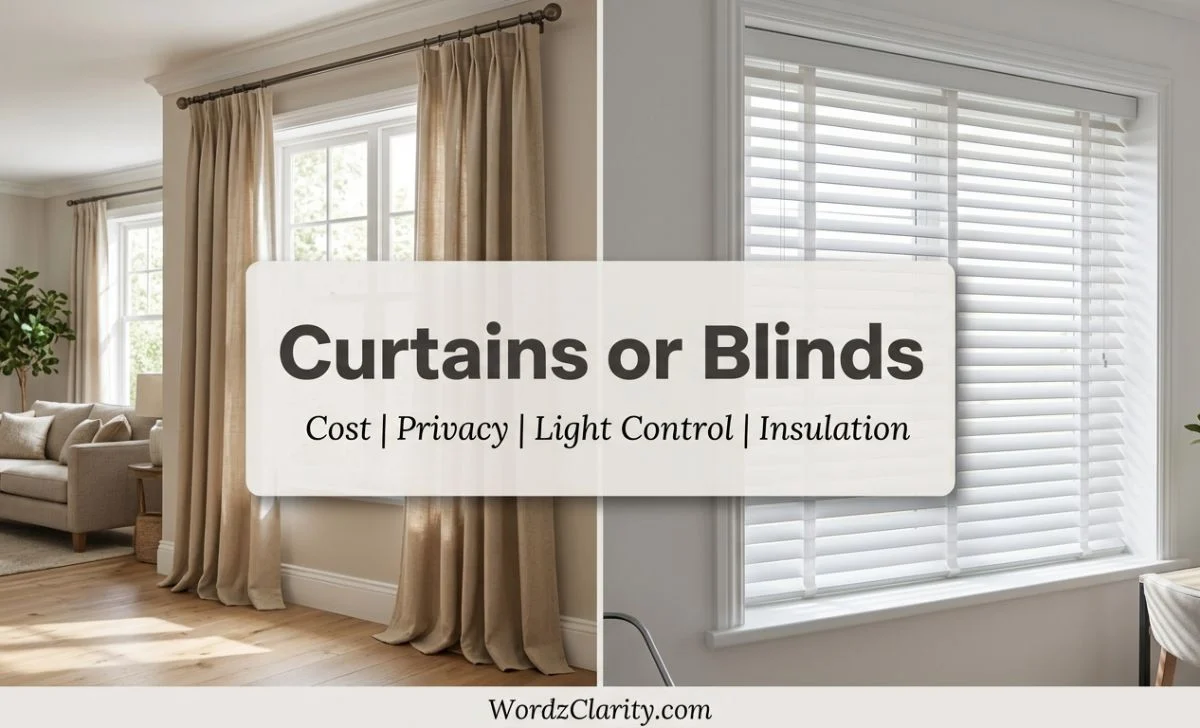
Choosing between curtains or blinds depends on your room, budget, and daily needs. Curtains add softness, color, and warmth to a space.
Blinds offer a neat appearance and give you more control over incoming light. Both can improve privacy and help manage sunlight, but their materials and designs affect how well they perform.
Curtains often suit bedrooms and living rooms where comfort and style matter. Blinds can be practical for kitchens, home offices, and smaller spaces. You can also combine both to enjoy the benefits of each.
The right choice is not always about appearance. You should also consider cleaning, insulation, privacy, and how much space your windows have. Understanding these differences will help you choose a window covering that fits your home.
Curtains or Blinds: What Is the Difference?
The main difference is their construction and how you operate them. Curtains are fabric panels that hang from a rod or track. You usually open and close them by moving the panels sideways.
Blinds have a more structured design. Depending on the type, they may contain horizontal slats, vertical vanes, fabric panels, or cellular pockets. You can raise, lower, or adjust many blinds to control sunlight and privacy.
Curtains create a softer appearance because their fabric folds and hangs around the window. Blinds generally offer a cleaner look and can fit inside a window recess.
| Feature | Curtains | Blinds |
|---|---|---|
| Main material | Usually fabric | Wood, metal, vinyl, or fabric |
| Operation | Move sideways | Raise, lower, tilt, or rotate |
| Light control | Depends on fabric and lining | Often allows more precise adjustment |
| Appearance | Soft and decorative | Neat and structured |
| Cleaning | Depends on fabric and care instructions | Often requires dusting or wiping |
| Space needed | Room for fabric panels to stack | Many types fit within the window frame |
| Insulation | Lined curtains can reduce heat loss | Cellular blinds can provide insulation |
| Design options | Many colors, patterns, and textures | Various materials, colors, and operating styles |
Neither option is automatically better. Your choice should depend on what you want the window covering to do.
Why Curtains May Be the Better Choice
Curtains are popular because they combine practical benefits with decorative appeal. They can make a plain room feel warmer and help connect the colors and textures of your furniture.
Creating a Softer and More Inviting Room
Fabric curtains soften the hard lines of windows, walls, and furniture. They also add depth to a room without requiring major changes to the interior.
For example, long beige curtains can complement wooden furniture and neutral walls. Darker curtains can create contrast in a bright living room.
The fabric matters, too. Linen-look curtains provide a relaxed appearance, while velvet curtains create a heavier, more formal effect.
However, thick fabrics can make a small room feel crowded if their colors and patterns compete with the rest of the decor. Choose a style that suits the room’s size and natural light.
Keeping Bedrooms Dark and Comfortable
Curtains can work well in bedrooms, especially when you choose a suitable lining.
Blackout curtains are designed to block most incoming light through the fabric. They can help people who sleep during the day or prefer a dark room at night.
For better results, choose curtains wide enough to cover the window and overlap at the center. Hang them beyond the window frame when possible to reduce light entering through the sides.
Keep in mind that blackout fabric does not always make a room completely dark. Light can still enter through gaps around the edges.
Helping Reduce Heat Loss
Lined curtains can provide an extra layer between the room and the window. This layer may reduce heat transfer and limit the feeling of cold air near a poorly insulated window.
Heavy curtains that cover the window fully can be useful during cold weather. They may also reduce some outside noise, although ordinary curtains cannot soundproof a room.
For better results, close the curtains at night and open them during sunny winter days when direct sunlight can warm the room.
Curtains are not a replacement for proper window sealing or efficient glazing. Their performance depends on the fabric, lining, fit, and window itself.
When Blinds Are More Practical
Blinds are useful when you want a compact window covering with adjustable light control. Their structured design also suits many modern and minimalist interiors.
Adjusting Sunlight Throughout the Day
One of the main benefits of blinds is the ability to change how much light enters a room.
Venetian blinds have horizontal slats that tilt. You can angle them to reduce glare while allowing some daylight through.
Vertical blinds use upright vanes that rotate and move sideways. They can work well on wide windows and sliding glass doors.
Roller blinds operate differently. The fabric rolls up or down, allowing you to uncover the window or cover it with a single panel.
For example, Venetian blinds can be useful in a home office. You can adjust the slats to reduce sunlight on your computer screen without making the room completely dark.
Saving Space Around Windows
Blinds often suit small rooms because many designs fit inside the window recess. They do not need wide fabric panels that gather beside the window.
This can be helpful when a desk, bed, or sofa sits close to the window.
Roller blinds are especially compact. When raised, the fabric rolls around a tube near the top of the window.
However, the amount of space saved depends on the blind’s design and installation. Some blinds extend beyond the frame, so measure the window and surrounding area before buying.
Choosing a Covering for Kitchens and Bathrooms
Kitchens and bathrooms need window coverings that suit moisture, steam, and frequent cleaning.
Aluminum and suitable PVC or vinyl blinds are often practical because they can usually be wiped clean. They may be easier to maintain than fabric curtains in areas where splashes and grease are common.
Not every blind is suitable for every wet area. Natural wood may warp when exposed to excessive moisture, and some fabrics can develop stains or mildew if they remain damp.
Check the manufacturer’s care instructions and choose materials designed for the conditions in your room. Keep all window coverings safely away from open flames and other heat sources.
Which Window Covering Works Best in Each Room?
Different rooms have different needs. A bedroom may require darkness, while a kitchen needs a covering that is easy to clean.
| Room | Suitable choice | Main reason |
|---|---|---|
| Bedroom | Blackout curtains or blinds | Reduces incoming light |
| Living room | Curtains or layered curtains and blinds | Adds style and flexible light control |
| Kitchen | Moisture-resistant blinds | Easy maintenance |
| Bathroom | Suitable privacy blinds | Helps protect privacy in a humid space |
| Home office | Adjustable blinds | Helps reduce screen glare |
| Small bedroom | Roller blinds or simple curtains | Makes better use of limited space |
| Large windows | Curtains or vertical blinds | Covers wide window areas |
These are starting points, not strict rules. The best option depends on your window size, room layout, privacy needs, and preferred appearance.
For example, a bedroom facing a bright street may benefit from blackout curtains. A small bedroom with a desk beside the window may work better with a roller blind.
Curtains or Blinds for Light, Privacy, and Insulation?
These three factors often influence the final decision. However, performance depends on the specific product rather than whether it is a curtain or blind.
Which Blocks More Light?
Blackout curtains and blackout blinds can both block most incoming light.
The result depends on the fabric, lining, installation, and gaps around the window. Blackout curtains may allow light through the sides or between panels. A standard roller blind may leave gaps around its edges.
If darkness is your priority, look for a product designed for room darkening. A blackout blind with side channels or well-fitted blackout curtains can provide better coverage than a loosely fitted covering.
For a bedroom, you can also combine blackout blinds with curtains. The blind controls light, while the curtains add another layer and improve the room’s appearance.
Which Offers Better Privacy?
Both options can provide privacy when properly fitted and closed.
Curtains offer broad coverage when their panels overlap. However, sheer curtains may allow people to see inside at night when interior lights are on.
Blinds with adjustable slats provide more control over visibility. You can change their angle to limit direct views while allowing some daylight into the room.
Still, slats may leave small gaps. For ground-floor bedrooms and street-facing bathrooms, choose a product that provides the level of privacy you need.
Which Helps Keep a Room Warm?
Lined curtains and cellular blinds can both help reduce heat transfer through windows.
Cellular blinds, also called honeycomb blinds, contain pockets that trap air. This structure can improve insulation compared with some conventional blind designs.
Thick curtains can also reduce drafts and help retain warmth, especially when they cover the window completely.
If energy efficiency is your main concern, compare the insulation properties of individual products. The window’s condition, frame, glazing, and installation also affect the result.
Are Curtains or Blinds Cheaper?
There is no single answer because prices depend on window size, materials, quality, and installation.
Basic roller blinds can be affordable for standard windows. Custom blinds, premium materials, and motorized controls can increase the price.
Curtains also range from inexpensive ready-made panels to costly custom designs. Fabric quality, lining, length, fullness, and curtain hardware all affect the total cost.
Before making a decision, compare the complete installation price rather than the product price alone.
Consider these expenses:
- The curtain fabric or blind itself.
- Curtain rods, tracks, brackets, or mounting hardware.
- Measuring and installation.
- Cleaning and maintenance.
- Replacement parts or future repairs.
For several windows, measure each one before requesting prices. This helps you compare similar products and avoid unexpected costs.
Can You Combine Curtains and Blinds?
Yes. Using both can give you more control over light, privacy, and appearance.
Blinds can handle everyday light adjustments. Curtains can add color, texture, and an extra layer of coverage.
For example, a bedroom could have a blackout roller blind with light-colored curtains in front. You could lower the blind at night and open the curtains during the day.
In a living room, Venetian blinds can control direct sunlight while decorative curtains soften the windows.
Before combining them, check the available space around the window. The curtains should move freely, and the blind should operate without catching on the fabric.
Layering is not necessary for every room. If you want a simple and affordable solution, one well-chosen covering may be enough.
How to Choose the Right Option for Your Home
Start with your main need rather than choosing a color or design first.
- For a decorative finish: Choose curtains that complement your furniture and wall colors.
- For precise light adjustment: Consider Venetian or vertical blinds.
- For a dark bedroom: Compare blackout curtains and blackout blinds.
- For a humid room: Choose a moisture-resistant material suitable for the space.
- For better insulation: Look at lined curtains and cellular blinds.
- For limited space: Consider compact roller blinds.
- For flexible styling: Combine blinds with curtains if the window has enough room.
- For easier maintenance: Choose a covering that matches your cleaning routine.
You should also consider child and pet safety. Cordless designs can help reduce the risks associated with accessible operating cords. Follow the manufacturer’s safety instructions, particularly in homes with young children.
Finally, measure your windows carefully. Consider how far the covering will extend, where it will sit when open, and whether it will interfere with furniture or window handles.
FAQs
1. Are curtains or blinds better overall?
Curtains are often better for a soft appearance and added insulation when lined. Blinds are useful for adjustable light control and compact installation. The right option depends on your priorities and room layout.
2. Do blinds look more modern than curtains?
Blinds often suit modern interiors because of their clean, structured appearance. However, simple curtains can also look contemporary when hung neatly with minimal hardware and suitable fabric.
3. Do curtains make a room look bigger?
Curtains can make a room appear taller when hung near the ceiling and allowed to fall toward the floor. Light colors and simple patterns may also create a more open appearance.
4. Are blinds easier to clean than curtains?
Many blinds can be dusted or wiped clean, depending on their material. Curtains may need machine washing, hand washing, or professional cleaning. Always check the manufacturer’s instructions.
5. Which is better for privacy at night?
Both can provide good privacy when properly fitted. Choose curtains with enough width to overlap or blinds designed to prevent unwanted views into the room.
6. Are blackout curtains better than blackout blinds?
Neither is always better. Both can block most incoming light when properly designed and installed. The fit around the window often makes a major difference.
7. Can curtains and blinds help reduce energy bills?
They may help reduce heat loss or heat gain through windows, which can support energy efficiency. Actual savings depend on the product, weather, window quality, and how you use the covering.
8. Which is better for a small bedroom?
Roller blinds often work well where space is limited. Curtains can also suit small bedrooms if they are hung neatly and do not obstruct furniture.
9. Can blinds replace curtains completely?
Yes. Blinds can provide light control, privacy, and a finished appearance without curtains. You may still prefer curtains for decoration, insulation, or layered coverage.
10. Should curtains be wider than the window?
Usually, yes. Extra width allows the fabric to gather and overlap when closed. The amount of extra fabric depends on the desired fullness, fabric type, and curtain track or rod.
Conclusion
Choosing between curtains or blinds depends on your needs, budget, and room design. Curtains add softness, decorative appeal, and potential insulation benefits. Blinds provide a compact design and flexible control over incoming light. For bedrooms and living rooms, combining both can offer the advantages of each. Consider privacy, cleaning, window size, and daily use before choosing a covering for your home.
Read More Blogs
- Sinus Infection or COVID: How to Tell the Difference (and When to Test)
- Disk or Disc: The Simple Guide to Spelling It Right
- Yea or Yeah: The Quick Guide to Using Each One Right (Plus Yay)