Steer or Stear: Which Spelling Is Correct in English?
One small spelling change can completely alter a word—or create a spelling mistake. That is exactly why many students, writers, ...
Read more
Midday or Mid-Day: Which Spelling Should You Use?
A tiny hyphen can create a surprising amount of confusion in English. That is why many students, writers, professionals, and ...
Read more
Leaped or Leapt: Which Past Tense Form Should You Use?
English has several verbs with more than one accepted past tense form, and leaped or leapt is a common example. ...
Read more
Tying or Tieing: Why “Tie” Becomes “Tying”
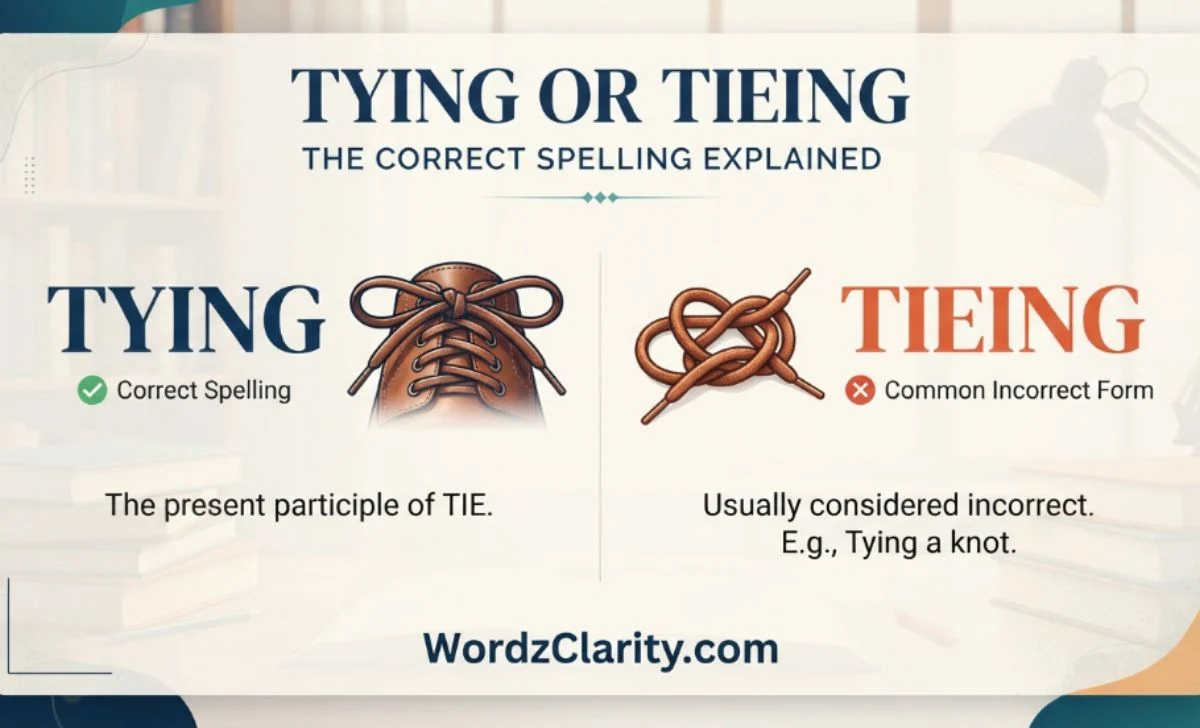
If you are unsure whether tying or tieing is correct, the standard spelling in modern English is tying. It is ...
Read more
An Unique or A Unique: Which Article Is Correct?
One small word can make a big difference in English. If you have ever wondered whether an unique or a ...
Read more
Everyone or Every One: Which One is Correct and Why?
One small space can completely change the meaning of a sentence. That is exactly why many people get confused about ...
Read more
Sang or Sung: Difference Explained With Easy Examples For 2026

If you’ve ever been confused between sang or sung, you’re not alone. These two words come from the same verb ...
Read more
Began or Begun: What’s the Correct Usage in English Grammar?

Many English learners and even native speakers often get confused between began and begun. Both come from the same verb ...
Read more
More Than or More Then: What Is the Correct Usage and Why It Matters

Many English learners, students, and even native speakers often get confused between more than and more then. At first glance, ...
Read more
Headcount vs Head Count: Meaning and Grammar Explained

Many people get confused between “headcount” and “head count” when writing English in HR, business, and office work. Both forms ...
Read more