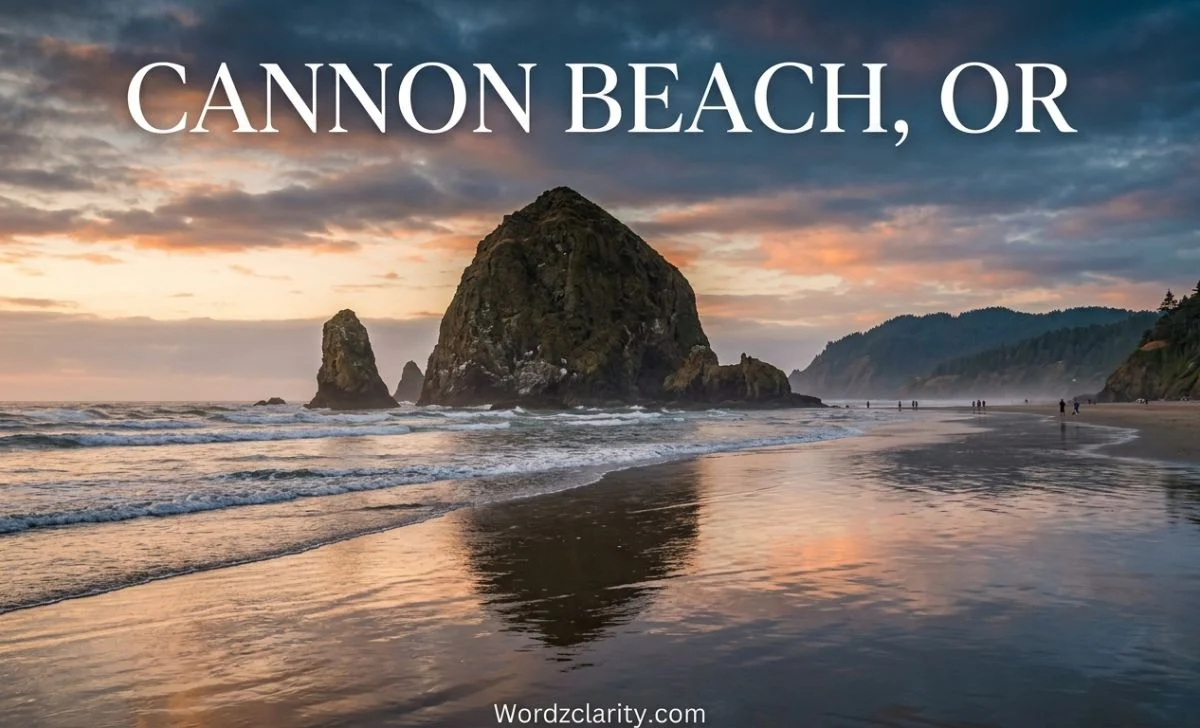
Cannon Beach, Oregon, is a small coastal city on the northern Oregon Coast known for Haystack Rock, wide sandy beaches, local art, and Pacific Ocean views.
Visitors come for tide pools, wildlife, scenic parks, and a relaxed seaside atmosphere. Its maritime history, walkable downtown, and nearby coastal attractions make it a popular destination for day trips and longer getaways alike.
Quick Answer: What Is Cannon Beach, Oregon, Known For?
Cannon Beach is a coastal city in Clatsop County, Oregon, best known for Haystack Rock, its sandy shoreline, tide pools, seabirds, art galleries, and scenic parks.
It is approximately 80 miles west of Portland and 25 miles south of Astoria. Popular activities include beach walks, wildlife watching, photography, exploring local shops, and visiting nearby state parks.
Haystack Rock: The Natural Landmark That Defines Cannon Beach
Haystack Rock is the most recognizable landmark in Cannon Beach. This basalt sea stack rises approximately 235 feet above the shoreline, creating a striking backdrop for photographs and coastal walks.
The rock formed through ancient volcanic activity and became exposed as the surrounding coastline changed over millions of years. Its distinctive shape now makes it one of the most recognizable natural features along the Oregon Coast.
At low tide, visitors can explore the intertidal area around the rock. Tide pools may contain sea stars, anemones, crabs, and other marine creatures. Haystack Rock also provides nesting habitat for seabirds, including tufted puffins.
The area is protected, so visitors should avoid touching marine life, removing shells or organisms, or disturbing nesting birds.
Best visiting tip: Check the tide forecast before planning your visit. Low tide generally offers better opportunities to see tide pools, but ocean conditions can change quickly. Keep a safe distance from incoming waves and follow posted guidance.
Why Is Cannon Beach Called Cannon Beach?
The city’s name is associated with a naval cannon recovered after the wreck of the USS Shark, a U.S. Navy schooner that sank near the Columbia River in 1846.
Parts of the shipwreck became connected to the region’s maritime history, and a cannon recovered near Arch Cape Creek in 1898 helped preserve the story behind the name.
Cannon Beach also has a much longer history than its modern identity as a vacation destination. Indigenous communities, including the Clatsop and Tillamook peoples, have deep ancestral connections to the northern Oregon Coast.
Today, visitors can learn about the region’s maritime past through local historical resources and museums. These stories add another dimension to a town often recognized primarily for its beaches.
Where Is Cannon Beach, Oregon?
Cannon Beach is located in Clatsop County on the northern Oregon Coast, beside the Pacific Ocean. It lies approximately 25 miles south of Astoria and 80 miles west of Portland.
U.S. Route 101 is the main highway serving the area. The surrounding landscape includes sandy beaches, forested headlands, coastal cliffs, and offshore rock formations.
Its location makes Cannon Beach a popular destination for travelers from Portland and other parts of northwestern Oregon. Visitors can explore the town itself or use it as a base for visiting nearby coastal communities.
Driving times depend on traffic, weather, and road conditions. Summer weekends and holidays can be especially busy, so leaving early may make the journey more comfortable.
Cannon Beach Weather: What to Expect in Every Season
Cannon Beach has a mild coastal climate influenced by the Pacific Ocean. Temperatures are generally moderate, but rain, wind, and fog can affect outdoor plans throughout the year.
| Season | Typical conditions | What to expect |
|---|---|---|
| Spring | Cool and changeable | Coastal walks, green scenery, and seasonal bird activity |
| Summer | Generally milder and drier | Beach visits, outdoor events, and longer daylight |
| Fall | Cooler with increasing rain | Quieter beaches and dramatic coastal scenery |
| Winter | Cool, wet, and sometimes windy | Powerful ocean views and storm watching from safe locations |
Summer is a popular time to visit because conditions are often more suitable for outdoor activities. However, the Oregon Coast does not consistently experience the hot weather found in many inland destinations.
Bring layers and a wind-resistant jacket in every season. Check the current forecast before traveling, especially if you plan to hike, visit tide pools, or explore exposed coastal areas.
Cannon Beach Population and Local Community
Cannon Beach had a population of 1,489 in the 2020 U.S. Census. Although the city has a relatively small permanent population, the number of people in town increases during popular travel periods.
Tourism supports many local businesses, including accommodation providers, restaurants, cafés, galleries, and independent shops. This seasonal activity gives the town a different atmosphere during a quiet weekday compared with a busy summer weekend.
Cannon Beach also has a strong creative identity. Art galleries, cultural events, and locally owned businesses contribute to the community’s character beyond its natural scenery.
The difference between the permanent population and the number of visitors is important when planning a trip. During peak periods, travelers should expect greater demand for parking, restaurants, and accommodation.
Best Places to Explore Near Cannon Beach
Cannon Beach is surrounded by coastal attractions that offer different views of the Pacific Northwest landscape. These nearby locations are worth considering when planning a longer visit.
Ecola State Park
Ecola State Park is known for forested headlands, hiking opportunities, and panoramic ocean views. Visitors can enjoy scenic viewpoints and explore trails through coastal forest.
It is an excellent option for travelers who want to experience more than the main beach. Check current park alerts before setting out, as weather and erosion can affect access to roads and trails.
Tolovana Beach State Recreation Site
Located near the southern end of Cannon Beach, Tolovana provides beach access and views toward Haystack Rock. It is a useful starting point for visitors exploring the southern part of town or looking for a longer shoreline walk.
Hug Point State Recreation Site
Hug Point features coastal rock formations, a seasonal waterfall, and remnants of an old route used by stagecoaches and other travelers before modern roads were established.
The area is particularly interesting for photography and coastal exploration. However, access around the rocky point depends on tide conditions. Never attempt to cross a headland if the incoming tide could leave you stranded.
Arcadia Beach State Recreation Site
Arcadia Beach offers another stretch of Oregon coastline with sandy areas and rocky formations. It can be a good choice for visitors who want to explore beyond the busiest parts of Cannon Beach.
As with other coastal locations, check conditions before entering rocky areas and follow any posted access restrictions.
Art Galleries and Cannon Beach’s Creative Culture
Cannon Beach has a reputation as an arts destination. Its galleries feature paintings, photography, ceramics, sculpture, glass art, and other creative work.
Many shops and galleries are located around the downtown area, particularly along Hemlock Street. This makes it convenient to browse local artwork, shop for gifts, or take a break from outdoor activities.
The town’s creative identity is also reflected in its cultural events and community traditions. Art contributes to the local economy and helps distinguish Cannon Beach from destinations focused mainly on beach recreation.
Visitors interested in particular galleries or exhibitions should check opening hours before arriving, as schedules can vary by season.
Annual Events and Community Traditions
Cannon Beach hosts community events throughout the year, including its well-known Sandcastle Contest, which began in 1964. Participants create elaborate sand sculptures that attract visitors to the shoreline.
Arts-related activities and seasonal events provide additional ways to experience the town beyond its beaches and natural attractions.
Event dates and schedules can change each year. Check the current local calendar before planning a trip around a specific festival.
Major event weekends may also increase demand for accommodation, parking, and restaurant tables. Booking ahead is sensible if your travel dates are fixed.
Wildlife and Tide Pools: How to Explore Responsibly
The coastline around Cannon Beach supports seabirds, marine invertebrates, and other wildlife. Haystack Rock is particularly important because it provides nesting habitat for birds and supports a variety of tide-pool species.
Visitors can help protect this environment by following a few simple practices:
- Observe marine life without touching or collecting it.
- Keep a respectful distance from nesting birds and other wildlife.
- Avoid stepping on fragile marine organisms.
- Watch the ocean closely, even when the water appears calm.
- Follow signs and instructions from local wildlife interpreters.
Tide pools are delicate ecosystems. Responsible viewing helps protect the creatures that live there and keeps the area enjoyable for future visitors.
How Tourism Supports Cannon Beach
Tourism plays a major role in Cannon Beach’s local economy. Visitors support hotels, inns, vacation rentals, restaurants, cafés, art galleries, shops, and recreational businesses.
The town’s popularity also creates practical challenges. Parking can be limited during busy periods, and accommodation may be harder to find during summer and major events.
Travelers can make their visits easier by booking accommodation in advance and checking parking restrictions before arriving. Exploring the downtown area on foot can also reduce the need to move a vehicle between nearby shops, restaurants, and beach access points.
Travelers without cars have some public transportation options, including regional bus connections. However, routes and schedules vary, so check current service information before relying on public transport.
Movies Filmed Around Cannon Beach
Cannon Beach’s distinctive coastline has appeared in well-known films, including The Goonies and Kindergarten Cop. Haystack Rock is one of the area’s most recognizable features for movie fans.
The region’s wide beaches, sea stacks, and dramatic coastal scenery make it an appealing backdrop for film productions. However, not every scene associated with an Oregon Coast movie was filmed in Cannon Beach itself.
Visitors can enjoy the familiar scenery while remembering that the beach remains a natural public space rather than a dedicated film attraction.
Getting to Cannon Beach and Getting Around
Most visitors arrive by car, using U.S. Route 101 and connecting highways from inland Oregon. The drive from Portland generally takes around 90 minutes to two hours, depending on traffic and road conditions.
Once in Cannon Beach, many downtown restaurants, cafés, galleries, and shops are close enough to explore on foot. Walking is especially useful during busy periods when parking spaces are limited.
Regional transportation services connect Cannon Beach with some neighboring coastal communities and Portland. Because schedules and services can change, check the latest timetable before traveling without a car.
If you plan to visit Ecola State Park or other nearby beaches, check directions, parking arrangements, and current access conditions in advance.
FAQs
Is Cannon Beach, Oregon, worth visiting?
Yes. Cannon Beach is a worthwhile destination for visitors who enjoy coastal scenery, beach walks, wildlife, art galleries, and small-town shops. Haystack Rock is its best-known attraction, while nearby parks and beaches offer additional places to explore.
What is Cannon Beach most famous for?
Cannon Beach is best known for Haystack Rock, a 235-foot basalt sea stack near the shoreline. The city is also known for its sandy beaches, art community, and annual Sandcastle Contest.
How far is Cannon Beach from Portland?
Cannon Beach is approximately 80 miles west of Portland. The drive commonly takes around 90 minutes to two hours, depending on traffic, weather, and the route.
When is the best time to visit Cannon Beach?
Summer is popular for beach visits and outdoor events. Spring and fall can offer a quieter experience, while winter brings dramatic coastal weather. The best season depends on your preferred activities and comfort with changing conditions.
Can you see puffins at Haystack Rock?
Tufted puffins nest at Haystack Rock during the warmer months, generally from spring into mid-summer. Sightings are not guaranteed because these are wild birds. Binoculars can help visitors observe them from a respectful distance.
Can you walk up to Haystack Rock?
Visitors can often walk closer to Haystack Rock at low tide. Access depends on tide and beach conditions. Check tide information, watch for incoming waves, and respect wildlife protection rules.
What is the population of Cannon Beach?
Cannon Beach had a population of 1,489 in the 2020 U.S. Census. The number of people in town can increase considerably during busy tourist seasons.
What places can you visit near Cannon Beach?
Nearby attractions include Ecola State Park, Tolovana Beach State Recreation Site, Hug Point State Recreation Site, and Arcadia Beach State Recreation Site. Each offers a different coastal landscape and outdoor experience.
Is Cannon Beach easy to explore without a car?
The downtown area and many beach access points are walkable. Regional buses connect Cannon Beach with some nearby communities, but routes and schedules should be checked in advance.
Final Thoughts
Cannon Beach, Oregon, combines a remarkable natural landmark with coastal history, wildlife, art, and a small-town atmosphere.
Haystack Rock is the main attraction, but nearby beaches, scenic headlands, and local cultural events offer plenty of reasons to explore further.
Check the weather, tides, and travel arrangements before visiting to make the most of your time on the Oregon Coast.
Read More Blogs
- Mecca or Makkah: Which Spelling Is Correct?
- Hillsboro, Oregon Weather: Today, Tomorrow & 10-Day Forecast
- Hermiston, Oregon: Things to Do, Where It Is, Food, Airport & More
- Ashland or Weather: What to Expect by Month, Season & Year